

The Rebel Monstera Grower’s Guide
Bold Plants. Smart Care. Legendary Leaves.
Monsteras aren’t just houseplants, they’re living architecture.
With their dramatic splits, climbing growth habit, and undeniable tropical presence, Monsteras have become icons in modern interiors. But behind those statement leaves is a plant that thrives when you understand how it actually grows in nature.
At Rebel Monstera, we believe in growing strong, healthy plants the right way, no gimmicks, no shortcuts. This guide gives you everything you need to grow your Monstera with confidence.
Why We Grow Monstera
Monsteras are not background decor.
They are statement pieces with roots.
Those massive split leaves. That sculptural silhouette. That climbing, untamed energy. None of it is accidental. A Monstera becomes iconic because it is grown with intention, structure, and real light.
Monstera deliciosa remains one of the most powerful indoor plants you can grow:
Massive sculptural foliage
Fast, satisfying development
Easy propagation
Timeless impact
Variegated forms bring collector energy, but fundamentals always come first.
Grow it strong.
Train it upward.
Let it take up space.
That is the Rebel way.
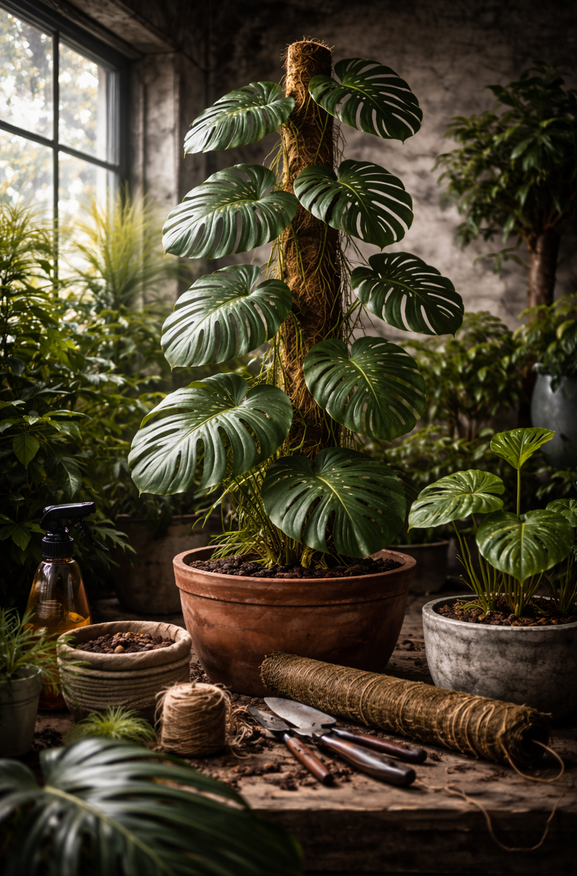
What a Monstera Actually Is
Monsteras are tropical climbers from Central and South American rainforests. They do not sit still in nature, they climb. They anchor themselves to trees using aerial roots and grow upward toward brighter canopy light.
Fenestrations, those splits and holes, develop with maturity, strength, and proper lighting. They are not guaranteed. They are achieved.
Treat your plant like a climber, not a table ornament, and everything changes.
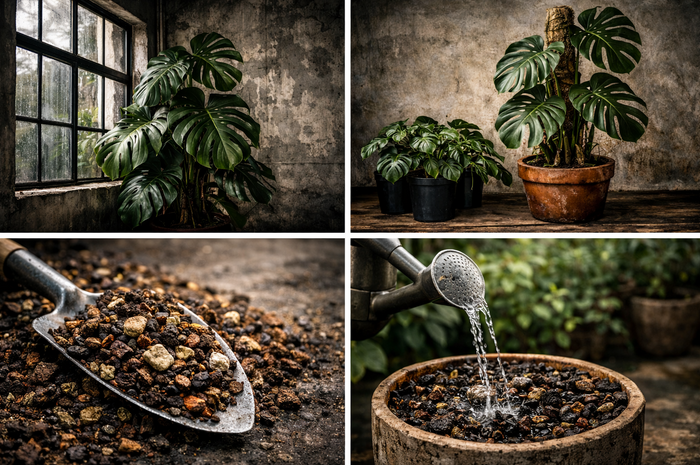
Light Is the Engine
If you remember one thing, let it be this.
Light drives performance.
Monsteras thrive in bright, indirect light. Not dim corners. Not aesthetic shadows.
Place them:
Near an east facing window
In bright, filtered southern exposure
Under quality grow lights if natural light is not strong enough
Low light will not kill your plant. It will stall it.
Weak light equals small leaves, no splits, stretched growth.
Rotate your plant every few weeks so it grows balanced instead of leaning toward one side.
Support Changes Everything
This is where most growers go wrong.
Monsteras climb. When you give them vertical support such as a moss pole, plank, or trellis, leaf size increases, fenestrations deepen, and stems strengthen.
Without support, you get sprawling growth and smaller leaves.
With support, you get presence.
If you want dramatic foliage, train upward.
The Non Negotiables
If you want performance, these matter most.
Soil That Breathes
Dense potting soil is the fastest way to stunt a Monstera.
We build our mixes for airflow and root health:
40 percent quality base potting mix
30 percent orchid bark or coco chips
20 percent perlite
10 percent worm castings or compost
Chunky. Aerated. Functional.
Your plant should never feel like it is planted in mud.
Water With Intention
Tropical does not mean swamp.
Monsteras like moisture, but they need oxygen at the roots. Over watering suffocates them faster than under watering.
Water when:
The top 2 to 3 inches of soil are dry
The pot feels lighter than usual
When you water:
Saturate thoroughly
Let excess drain completely
Never let the pot sit in runoff
Yellow leaves with wet soil are not thirst. That is stress.
Performance Details
Once your fundamentals are locked in, these refine growth.
Feed for Growth, Not Survival
During active growth in spring and summer, feed consistently.
Balanced liquid fertilizer every 4 to 6 weeks
orSlow release fertilizer at the start of the season
If your plant is pushing new growth under lights year round, adjust accordingly.
Pale foliage and undersized new leaves often signal nutrient deficiency.
Strong plants require fuel.
Humidity and Temperature
Monsteras prefer warmth and moderate humidity, but they adapt well when acclimated.
Ideal range:
65 to 85 degrees Fahrenheit
60 percent humidity or higher for peak performance
Lower humidity will not destroy them, but crispy edges and slower growth can follow.
Avoid cold drafts. Avoid sudden temperature drops. These are tropical climbers, not patio plants.
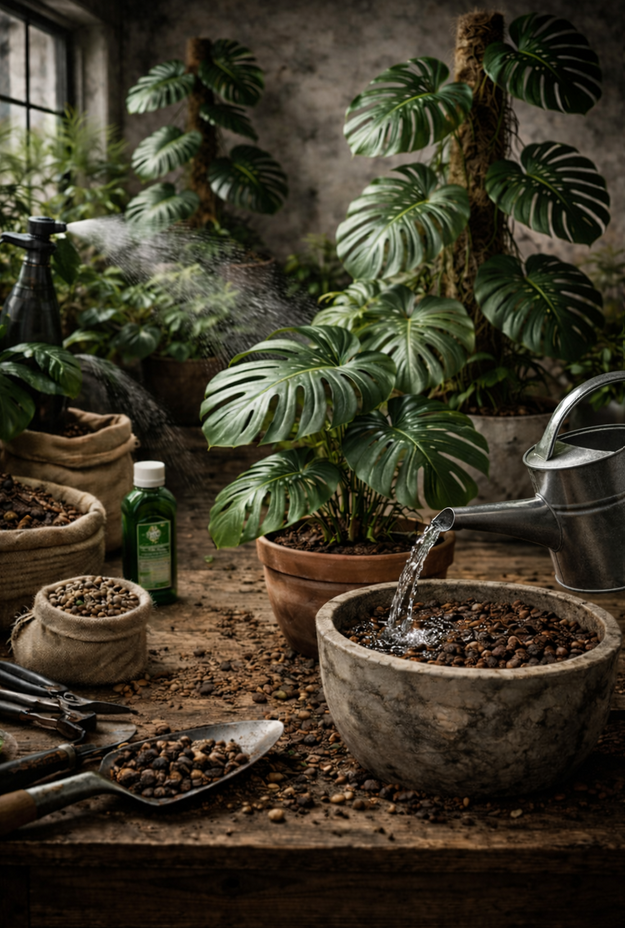
Repotting Without Drama
Repot every 1 to 2 years or when roots begin circling heavily.
Size up about 2 inches
Refresh with fresh chunky mix
Water thoroughly after
Slightly root bound is fine. Oversized pots with soggy soil are not.
Spring and early summer are ideal for repotting.
Pruning With Purpose
Prune to shape, not to panic.
Cut just above a node to encourage branching
Remove weak or damaged growth
Keep aerial roots intact unless compromised
Intentional pruning builds a fuller, stronger plant over time.
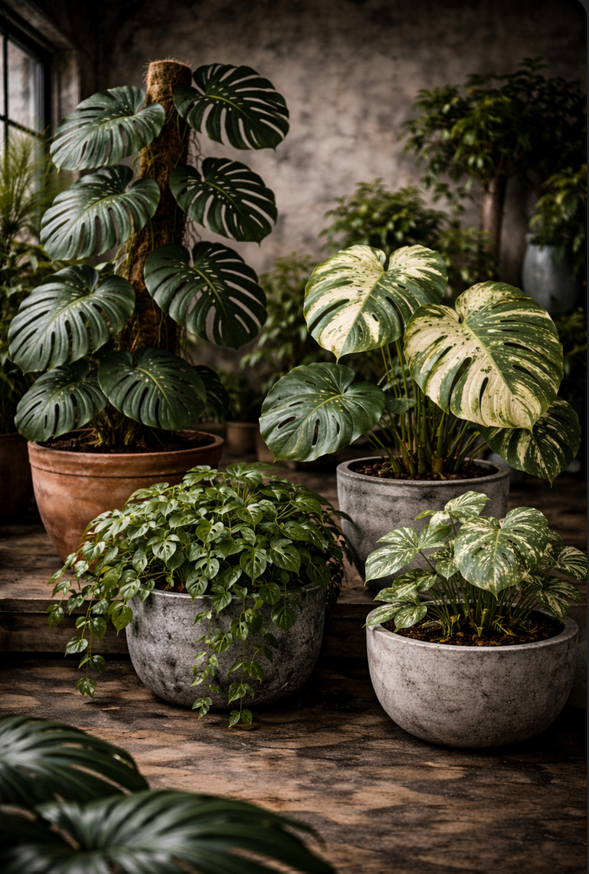
The Core Lineup
While the genus includes many species, these are the ones that dominate serious collections:
Monstera deliciosa
The heavyweight. Large leaves, deep splits, and dramatic vertical growth when properly supported.
Monstera adansonii
Fast growing, hole filled foliage that thrives when allowed to climb or trail with intention.
Monstera deliciosa Albo Variegata
Unstable, striking white variegation with high visual impact and higher attention required.
Monstera Thai Constellation
Cream speckled stability created through tissue culture. Slower growing but structurally impressive.
When Something Looks Off
Plants communicate. You just have to pay attention.
No splits?
Likely insufficient light or immature growth.
Drooping leaves?
Check moisture levels and root health.
Brown edges?
Low humidity or fertilizer buildup.
Yellowing leaves?
Most often over-watering.
Pests to Watch
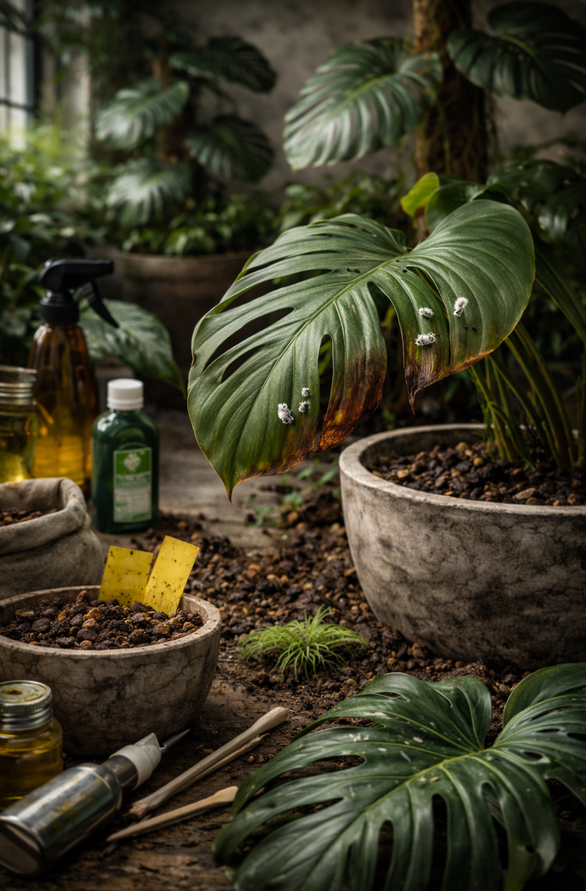
Even tough plants can attract problems. Inspect regularly.
Common issues:
Spider mites with fine webbing and speckled leaves
Mealybugs with white cotton like clusters
Fungus gnats often tied to overwatering
Treat early with insecticidal soap, neem oil, alcohol swabs, or sticky traps as appropriate.
Healthy airflow, proper watering, and clean growing conditions are your first line of defense.
Final Word
Monsteras are not fragile trends. They are resilient, adaptable, and built to climb. When you give them structure, light, and intention, they respond with growth that feels almost unstoppable.
Do not be afraid to experiment. Adjust the light. Try a moss pole. Repot when it feels right. Learn your plant. Pay attention. Growth is part science, part instinct.
Building an indoor jungle is not about perfection. It is about progress. It is about learning what works in your space and having the confidence to try.
Take the risk. Move the plant closer to the window. Train it upward. Prune it back. See what happens.
Plants reward action.
So get out there. Take a chance. Have fun with it.
Grow boldly.